Sunday, August 25, 2013

First pictures from Montana, 2013: Grant Creek


One of the virtues of staying where we do in Missoula is that Grant Creek runs through our backyard.  So, I get to photograph insects before I head out to the streams to catch those big, beautiful trout.

I'm at a disadvantage -- I have to work on a Windows machine: sure miss my iMac that's sitting at home.  That means I don't have the editing software that I normally use, so these photos will look a bit rough.  Still, I'd better make a start on these photos and clean them up when I get home.

Some of the insects I found I've identified before -- others require microscope work when I get home.  That being said let me show you some of the beautiful insects that live in this tiny creek.

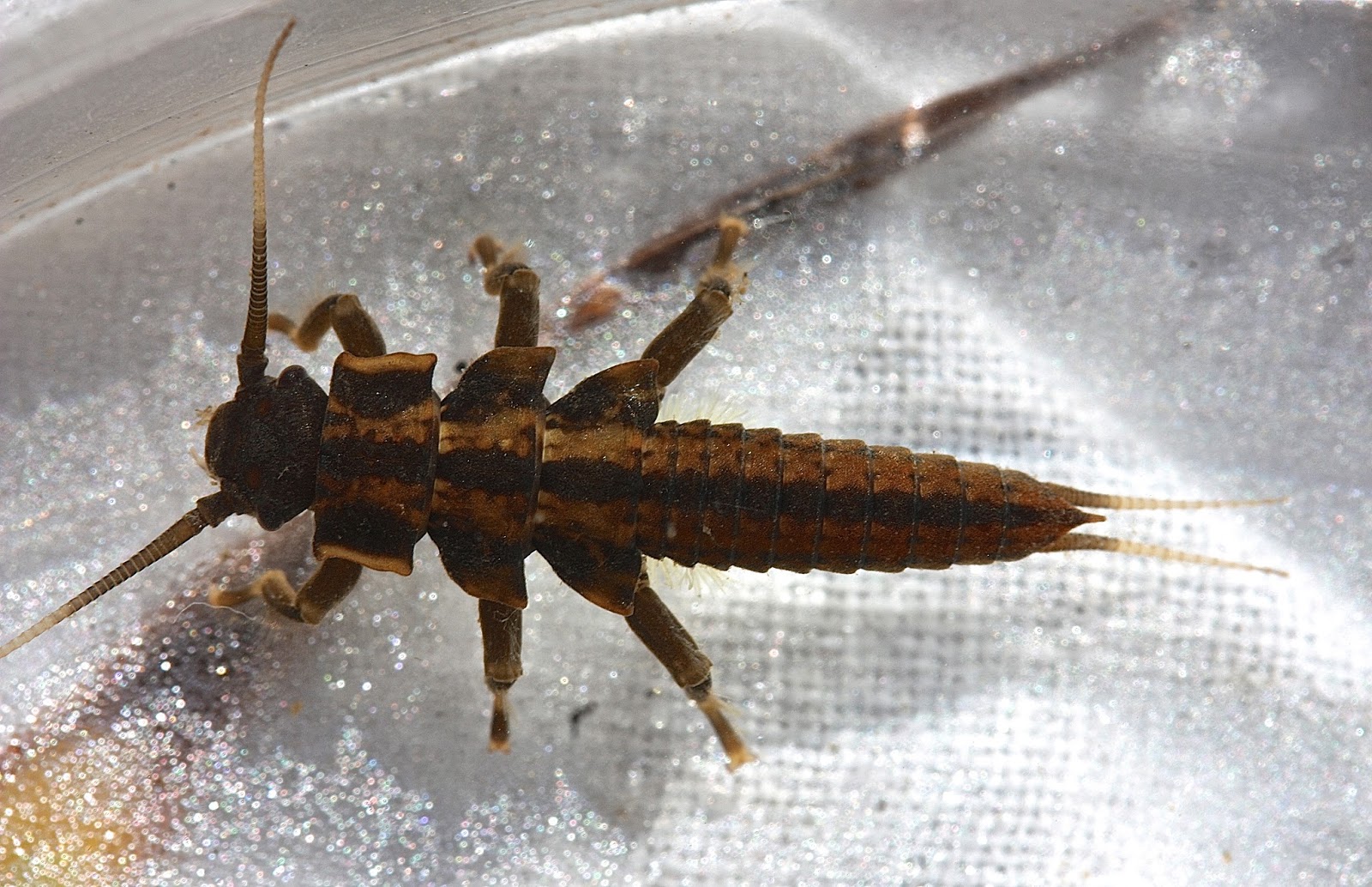
1. Above, a small minnow mayfly, and I'm pretty sure it's one that we see in VA as well, Baetis tricaudatus.


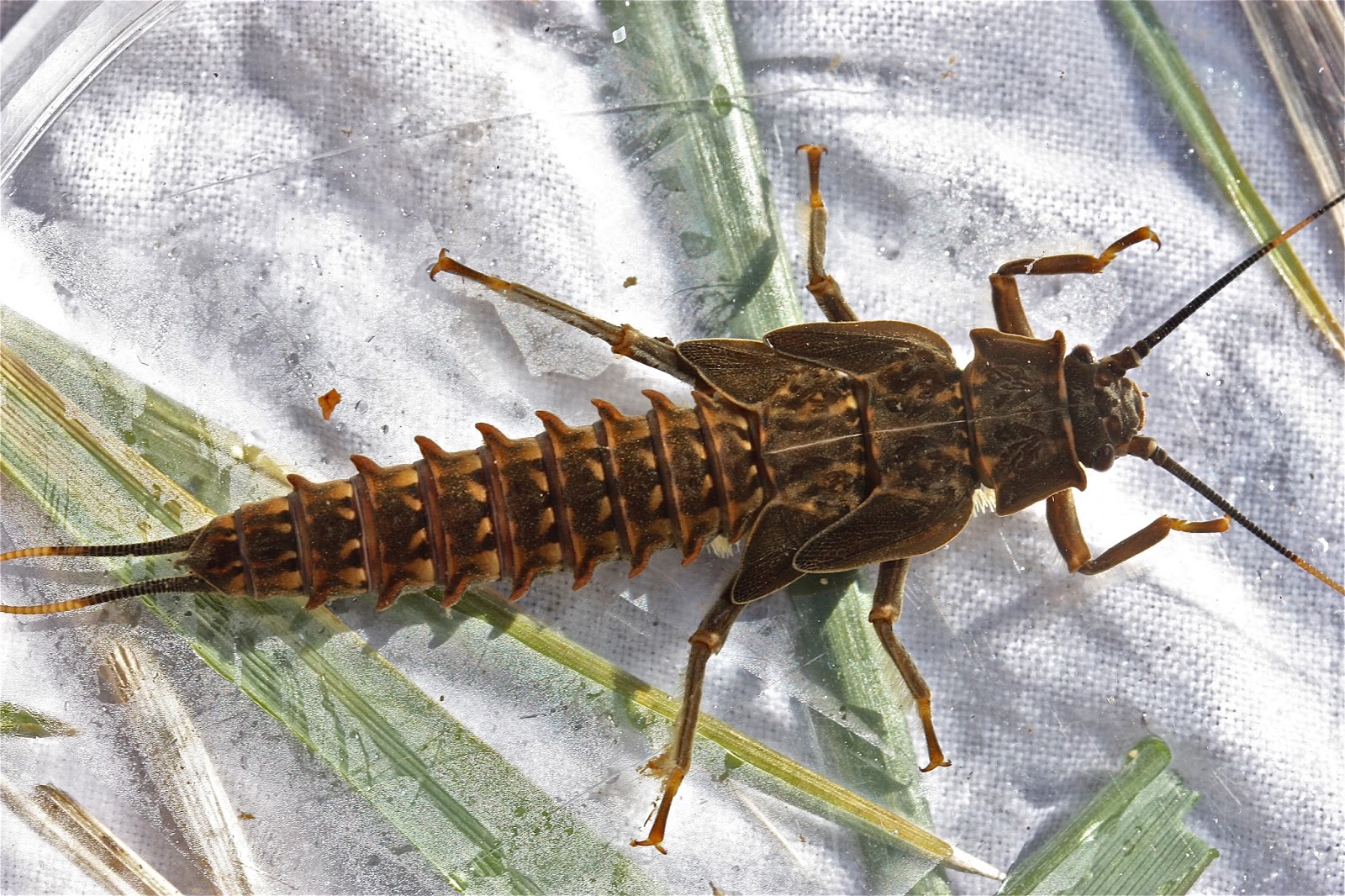
2. The spiny crawler mayfly that I always see at this time of year in Montana, Drunella coloradensis.  Comes in lots of different colors.


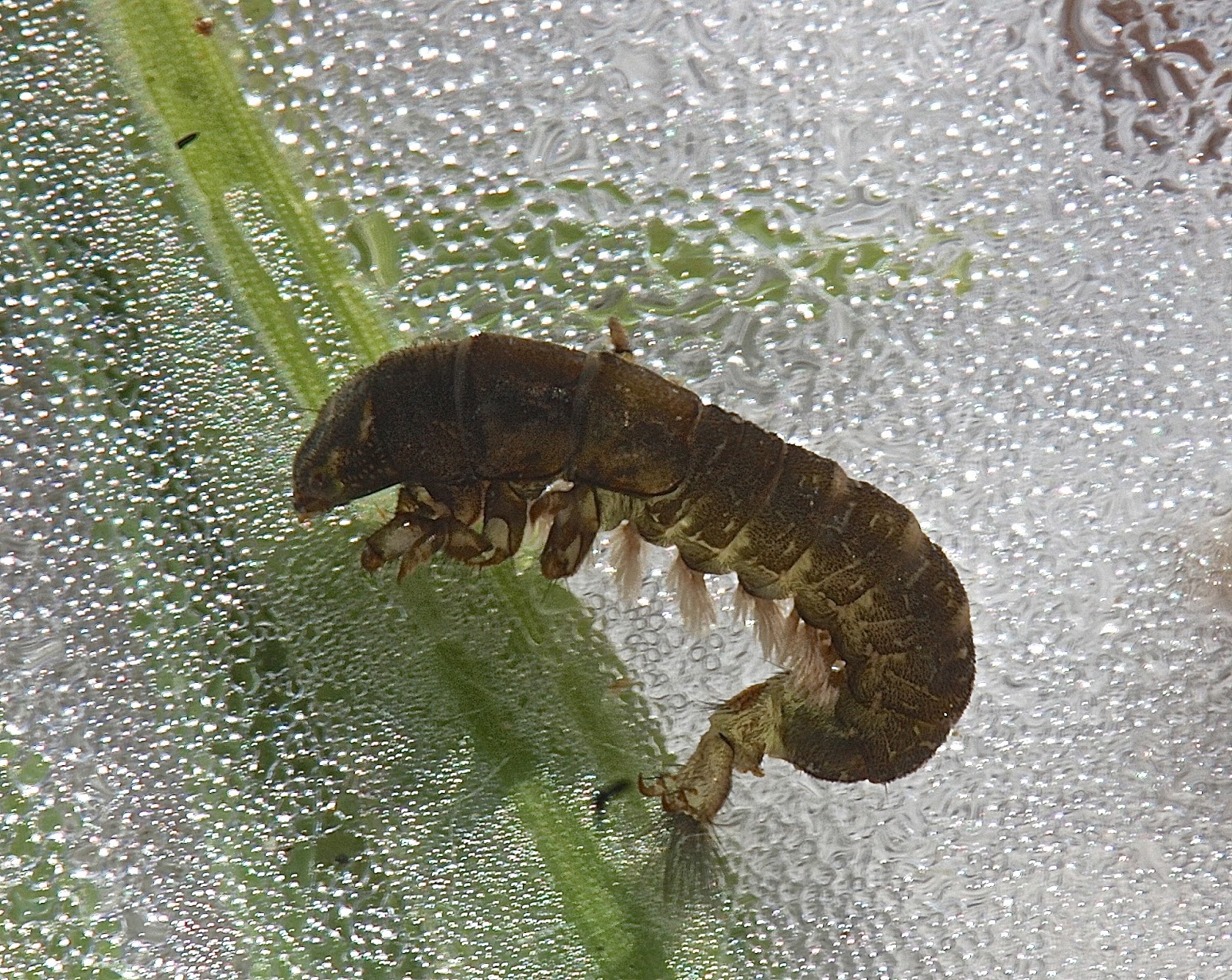
3. A freeliving caddisfly larva!  First one I've ever seen out here.  Genus Rhyacophila (there's only one genus): species, unknown.  This appears to be R. Grandis Gr.   See, http://www.flyfishingentomology.com/PNW%20Caddisflies.htm#Rhyacophila: "Distinguished by two clusters of gills on each side of most abdominal segments. Front 2/3 of the head usually dark and the posterior mostly light in color. Pronotum is usually light with a dark stripe down the middle."


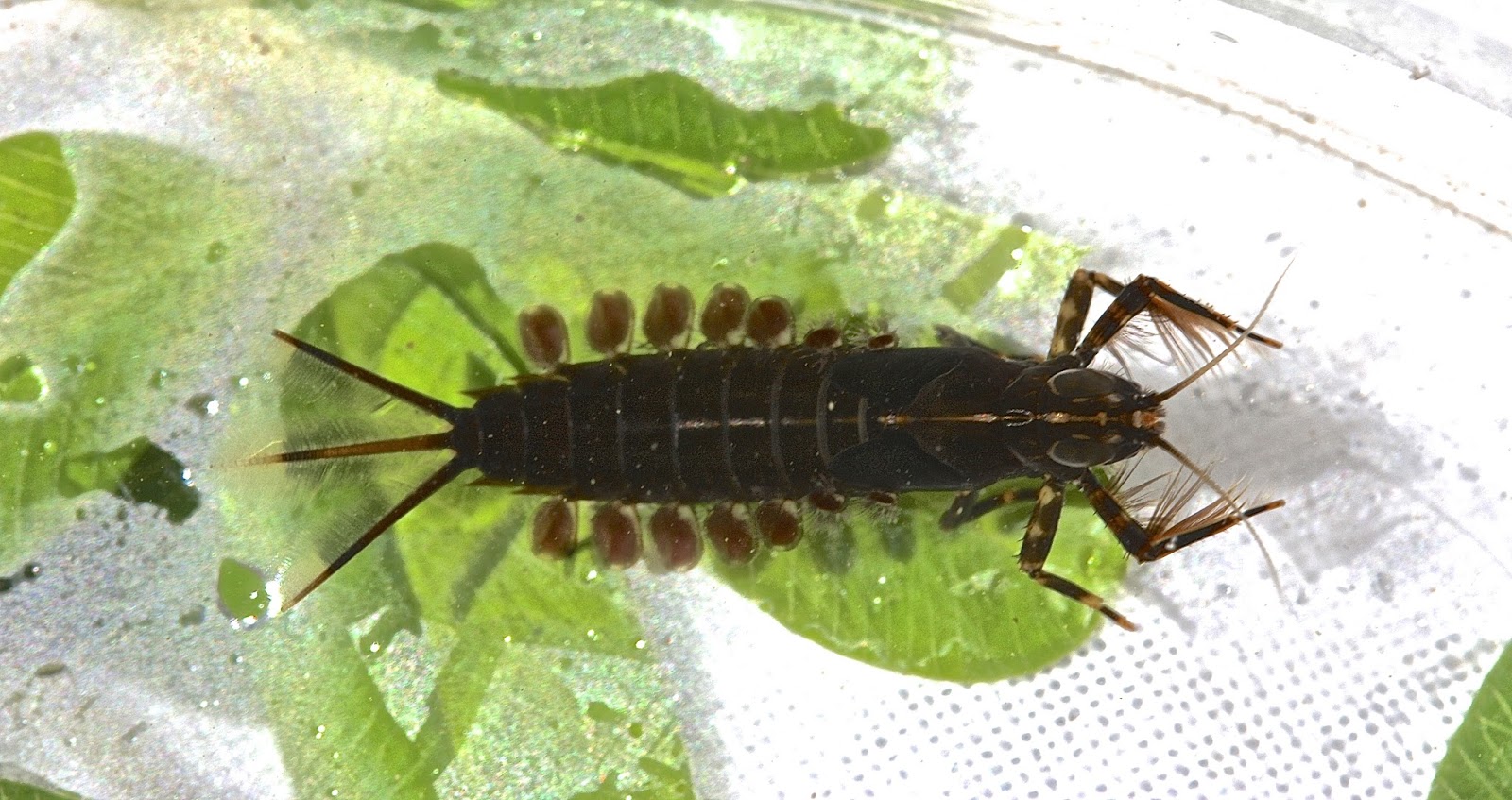
4.  Common netspinner, Arctopsyche grandis.  Identified this one last year.  Neat pix!


5. A Glossosomatid (Saddle-case maker) -- genus and species unknown.  Have to work on this one.


6. Flatheaded mayfly, Epeorus for sure, and probably E. deceptivus.  More work when I get home.  Lots of these nymphs on the rocks.


7.  A Green stonefly (Chloroperlid).  Looks like genus Sweltsa -- species unknown.


8.  And, this tiny, tiny stonefly -- I'm amazed that this photo turned out! -- ID will have to wait.

_______________________

Stay tuned!

Wednesday, August 21, 2013

Montana time


It's a time of year to which I always look forward.  I'm off to Missoula early Saturday morning, returning on Friday 8/30.  I'll soon be seeing the beautiful spiny crawlers, Drunella coloradensis (in the photo above), and the spectacular Giant stoneflies, Pteronarcys californicus.


And then there's that weird looking spiny that we don't see in the East, Timpanoga hecuba.


We'll be floating the Blackfoot River, which I hope will be looking like this:


but I won't be surprised to see flaming hills from time to time as we did two years ago.


Still, the guides say that the fishing is good,  and with luck the bad fires will stay on the other side of the Bitterroot mountains.

Will I be collecting insects for photos?  You bet!  So, the next entry will probably come from Montana.  And there may be a picture or two of an osprey, a common sight on these rivers.


Friday, August 16, 2013

Pteronarcys dorsata: our summer, warm water Giant


I went to the North Fork of the Rivanna this morning, and if you've read blog entries from previous summers you know that I go there for only one reason: to photograph the common netspinner Macrostemum.  I had no trouble finding Macrostemum larvae -- but this was the catch of the day.  Giant stonefly, Pteronarcys dorsata.  I found one last week in the Rivanna at Crofton, but the colors on that one weren't very pronounced.  This was a beauty.

While we associate Giant stoneflies with clean, cold, mountain streams and expect to see them -- mature nymphs at least -- in the winter, this is a species that we find in the summer and fall in warm water rivers and streams, rivers like the Rivanna.  Let's look at Beaty's ID:


P. dorsata -- frontoclypeus with lateral and somewhat truncate lobes adjacent to antennal pedicels; lateral angles of pronotum produced, anterolateral ones almost hook-like; no lateral projections on abdominal segments; each tergite with anterior and posterior abdominal spots sometimes confluent to give the abdomen a longitudinally striped appearance (3-5 stripes possible).  Common and widespread (excluding Slate Belt).  Univoltine although BAU data suggests a semivoltine life history with nymphs most abundant from June to October.  Associated with Podostemum ceratophyllum (riverweed).   ("The Plecoptera of North Carolina," p. 28)

1) From conversations with Steven Beaty, I've concluded that the shape of the frontoclypeal "lobes" is not that important for identification.  But, this is what one of them looks like.


2) The lateral angles of the pronotum are indeed "produced" (sticking out, pointed), and there are no lateral projections on the abdominal segments.


3) But what are especially clear on this specimen are the dark spots on the anterior and posterior edges of the tergites that give the appearance of longitudinal bands.  I'd say there five dark bands on a yellowish background.


So this Giant does not look at all -- in terms of the colors and patterns -- like the other two species we've found: Pteronarcys biloba (Rapidan River) and Pteronarcys proteus (small mountain streams in Sugar Hollow).  Compare.

P. biloba


P. proteus


By the way, the P. dorsata nymphs that I've seen are quite a bit smaller than the cold water Giants of winter.  This nymph was 14 mm: mature Giants range from 35-50 mm.
_________________

On the netspinners in the North Fork -- I found lots of those fat, long, green Macrostemums packed away in lumps of pebbles and sand on the bottoms of rocks, while on top of the rocks, crawling around in the gnarled vegetation, there were numerous Hydropsyche rossi.  Why does each live where it does?  It'd be nice to know.

Macrostemum (they're either M. carolina or M. zebratum)


And a side view revealing the slope of the head.  It's a strange looking critter.


A good photo taken last year.


Hydropsyche rossi is a netspinner on which the muscle scars on the side of the head remain level.  I.e. they do not move towards the top of the head at the rear as they do on H. venularis.


________________

I also found a few small minnow mayflies.  They were all Heterocloeon curiosum.

________________

But this was the prize: the Giant stonefly, Pteronarcys dorsata.


Thursday, August 15, 2013

An unusual find at South River


I wasn't sure where to go this morning since the Rivanna, once again, is high and muddy from recent rains.  But I thought I'd see what I could find in South River up in Greene County even though there's not much going on in the small mountain streams in the summer: the wonderful insects that we find in those streams in the winter and spring are very small at the moment, many of them still calling the substrate home.

For the most part, I found what I expected to find: lots of small Peltoperlids (Roach-like stoneflies); a number of "tiny" Giants (P. proteus); the odd Epeorus vitreus flatheaded mayfly; and common netspinners -- Ceratopsyche sparna and Ceratopsyche alhedra.  But the very first insect I saw was this Brush-legged mayfly, Isonychia sp.  Why is it unusual?  It's fully mature: in fact, I think it's in the process of hatching!

Evidence.  1) It was lethargic and easy to pick up with my tweezers.  Normally, brushlegged mayflies flip and squirm and bounce off the rocks when you try to get near them.  2) The thorax was bulging, as it would be if the wings were about to emerge.  And 3) the eyes seemed a bit glassy, something I've noticed before on nymphs in the process of hatching, and if you look closely, I think you can see that the thorax is, in fact, splitting open.


One other feature -- in this side view, you can see that the wing pads themselves are pushing up from the body.


Very cool.   Brushlegged mayflies normally hatch at this time of year -- late summer -- and I've been seeing "shucks" on the rocks in the Rapidan River.


________________

A few other photos.

1. Common netspinner, Ceratopsyche sparna. (Bronze head with two anterolateral pale spots.)


2. Common netspinner, Ceratopsyche alhedra. (Head is totally black.)


3. And a common stonefly (Perlid), Acroneuria carolinesis.  (Note that the tergites are banded, light at the front and dark at the back.)


_______________________


Thursday, August 8, 2013

Labiobaetis propinquus: a new small minnow mayfly at the Rivanna


It was a good morning at the Rivanna at Crofton --despite the cloudy, humid conditions that made getting good photos a challenge.  I found a number of small minnow mayflies that appear to be a new species for us -- Labiobaetis propinquus (formerly Pseudocloen propinquum).  I say "appear to be" since THE defining characteristic is one that requires slide mounting of the labrum to look for small setae, something I simply can't do.  Still, there are other key features that we clearly can see, and, L. propinquus was Beaty's guess when he looked at my photos.  (In the first edition of "The Ephemeroptera of North Carolina," this species is identified as Pseudocloen propinquum (p. 13) but that has been changed to Labiobaetis propinquus in the second edition (p. 19).)

Before we look at Beaty's species description, it's important to note that these nymphs come in light and dark forms, and I found both this morning.  Here are two of the dark ones.


Labiobaetis propinquus -- nymphs 4-6 mm; submarginal setae on labrum simple with paired setae; tracheation of gills not extensive; usually has distinct color pattern, often with terga 2, 5, and 10 pale and typically with dark elongated spots down dorsal centerline.  A dark morph exists...with head, thorax and abdomen dark and with sterna 1-4 or 5 with medial area pale. However, labral setation confirms this as L. propinquus.  Most common Labiobaetis in NC furing spring through fall.  Widespread and facultative.  ("The Ephemeroptera of North Carolina," 2nd edition)

1. The nymphs that I found this morning were 4.5 mm and 5 mm.

2. I, unfortunately, have no way to check on the labral setation.

3. The gill tracheation is simple.


4. The pale shading of terga 2, 5, and 10 is most easily seen on the dark nymphs.


5. While the elongated dark spots are more easily seen on lighter nymphs.


6. To see the pale medial areas on sterna 1-5, we need a microscope view.


I think the evidence is pretty convincing though I may send some specimens to Beaty for confirmation.

Labiobaetis propinquus is a fairly tolerant species -- no surprise there -- with a TV of 5.8
______________________

But I was in for another treat at the Rivanna this morning.  I found a fair sized Giant stonefly, and I think I now know the species that inhabits this river: Pteronarcys dorsata.


There are two keys to this identification: 1) the "lateral angles of [the] pronotum [are produced, anterolateral ones almost hook-like," and 2) there are "no lateral projections on [the] abdominal segments." (Beaty, "The Plecoptera of North Carolina," p. 28)


If we want to see lateral projections on the abdominal segments of a Giant stonefly, we look at P. biloba!


Pteronarcys dorsata is the most tolerant Giant stonefly we see with a TV of 2.4.  The other Giants we've seen -- P. biloba and P. proteus -- have tolerance values of 0.0 and 0.4 respectively.

Pretty nice findings today, and I got some nice photos of a male H. curiosum as well as a couple of Tricos (Little stout crawler mayflies -- Leptohyphidae).


________________

Labiobaetis propinquus